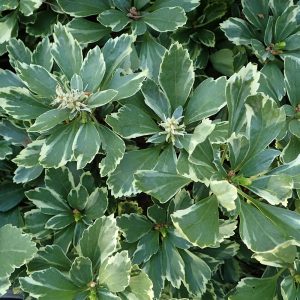
Family Polypodiaceae.
Originating from Europe.
- Deeply lobed fronds have a complex, intricate shape.
- Evergreen foliage provides excellent ground cover in difficult dry shady positions.
- Compact and hardy, it is easy to grow in any garden setting.
The Crested Polypody Fern in Your Garden
Fascinatingly bifurcated leaves have a ruffled, elegant form supported on upright, slender stems. Their upright evergreen fronds have a ladder-like arrangement of leaflets, with added subdivisions. Especially prominent at the frond tips, they resemble sprays or crests.
Polypodium vulgare ‘Bifidocristatum’ is fully hardy in all UK gardens, growing to 30–45cm tall and wide in 2- 5 years. Its delightful, slowly spreading colonies are perfect for deep shade in Norfolk’s woodland gardens and stumperies. Alternatively, it will happily grow out of sunny, rocky crevices or walls in Suffolk’s seaside gardens, although less lushly.
Its rhizomatous roots spread just below soil level and over the surface of stones, tree stumps or fallen trunks. In ideal damp and cool conditions, it can form a dense ground-covering mat. Its adaptability makes it suitable for growing in pots, where it can be appreciated close-up on patios.
Did you know?
The common Polypody’s roots naturally contain a sweet, liquorice-like compound (osladin). Indigenous European and Native American groups historically used it as a sweetener in drinks and candies.
Growing Tips for Your Crested Evergreen Fern, Polypodium vulgare ‘Bifidocristatum’
- Soil and sun: for maximum lushness; any non-acidic soil, in part shade. Light humus-rich soil is ideal. However, it is lithophytic (rock-loving) and is adaptable to growing in sunny crevices in walls with almost no soil. In these conditions, it forms a much sparser, less lush plant.
- Planting: at any time of year. Never plant a dry plant! Plunge for 10 minutes to drench the root ball before planting. Do not add soil improvers.
- Watering and care: Moderate; tolerates brief dry spells once established. Water regularly in its first summer while rooting out.
Polypodium vulgare is native to many countries worldwide and has been cultivated for thousands of years. A Greek physician noted its healing properties in the first century BC. This cristate form has been cultivated for nearly 160 years, thanks to the Victorian obsession with ferns. Beyond its beauty, this crested evergreen fern connects your garden to a long tradition of healing and cultural reverence.