Family Malvaceae.
Originating from East Asia.
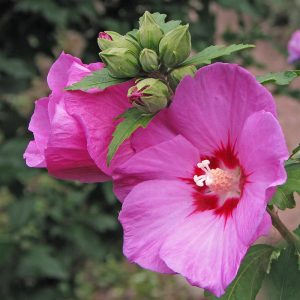
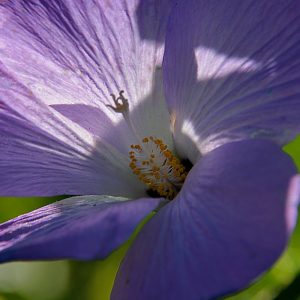
- Spectacular, exotic blue-purple flowers with magenta markings.
- An upright, well-branched habit forms a neat, compact shrub.
- Reliable and hardy, it is easy to grow in full sun.
The Late Flowering Blue Hibiscus in Your Garden
Reminiscent of tropical exuberance, hibiscus flowers flare widely, with a protruding central filament. This form gives the delicious blue-violet petals of H. ‘Marina’ a chance to display their striking central burgundy-red markings. Borne in profusion, evenly all over the plant, they provide a spectacular end to summer and valuable food for pollinators.
Hibiscus syriacus ‘Marina’ is fully hardy in all but the coldest, exposed UK gardens. It grows to around 1.5–2.5m tall and 1–1.5m wide over 5–10 years, broadening with age. Highly tolerant of coastal climates and drought, it is the perfect choice for seaside gardens in Norfolk and Suffolk. Its compact form makes it suitable for small gardens and growing in pots.
As though saving its energy for its late-season fiesta, Hibiscus syriacus varieties are late into leaf. Their neat, lobed leaves emerge in May in a cheerful shade of apple green with the flower buds appearing soon afterwards. By July, the first flowers open, beginning a succession of blooms that can last until mid-September.
Did you know?
Hibiscus syriacus flowers are edible and have a long history of being consumed. In Korea, they are often eaten, and in parts of China (Guangdong/Fujian), they are used in traditional dishes and for making tea.
Growing Tips for Your Tree Mallow, or Rose of Sharon, Hibiscus syriacus ‘Marina’
- Soil and sun: Any well-drained non-alkaline soil in full sun.
- Planting: at any time of year. Never plant a dry plant! Plunge or stand in water to thoroughly drench the rootball before planting. Do not add soil improvers.
- Watering: moderate; tolerates spells of drought once established. Water young plants during summer in their first two seasons.
Cultivated in Korea for centuries, the species has been bred to produce hundreds of cultivars, including this late-flowering blue hibiscus. In many Asian countries, it has a long history of cultural significance and medicinal uses and is the national symbol of Korea. Enjoy the calming, ethereal blue flowers in your garden, embodying the Chinese symbolism of beauty and healing.